Why Cast Iron Is Worth the Extra Care
Cast iron cookware can genuinely last generations — plenty of people cook on skillets inherited from a grandparent. It develops a natural, food-safe non-stick coating (called "seasoning") over time, holds heat incredibly well, and can go from stovetop to oven to campfire. The tradeoff is that it needs a bit more care than non-stick or stainless steel. Here's exactly what that care looks like.
Cleaning Cast Iron the Right Way
- Skip the soap (mostly): A small amount of mild soap is fine occasionally, but heavy scrubbing with soap regularly can strip seasoning over time.
- Clean while it's still warm: Food releases more easily, and it's much less effort than waiting until it's cold.
- Use a stiff brush or chainmail scrubber: For stuck-on food, a stiff brush or salt scrub works better than metal scouring pads, which can damage seasoning.
- Dry immediately and completely: Cast iron rusts if left wet — towel dry, then place on low heat for a minute to fully evaporate any moisture.
Seasoning: The Step Most People Skip
After cleaning and drying, rub a very thin layer of oil (vegetable, canola, or flaxseed oil all work well) over the entire pan — inside and out. Wipe off any excess with a paper towel until it looks almost dry. This thin oil layer polymerizes with heat and builds up the pan's protective, non-stick seasoning layer over time.
If your pan ever gets a spot of rust or the seasoning looks patchy, don't panic — a stovetop or oven re-seasoning session (a few thin oil coats baked on at 450–500°F) will bring it right back.
Cooking Tips for Better Results
- Preheat cast iron for a few minutes before adding food — it holds heat unevenly until it's fully warmed through.
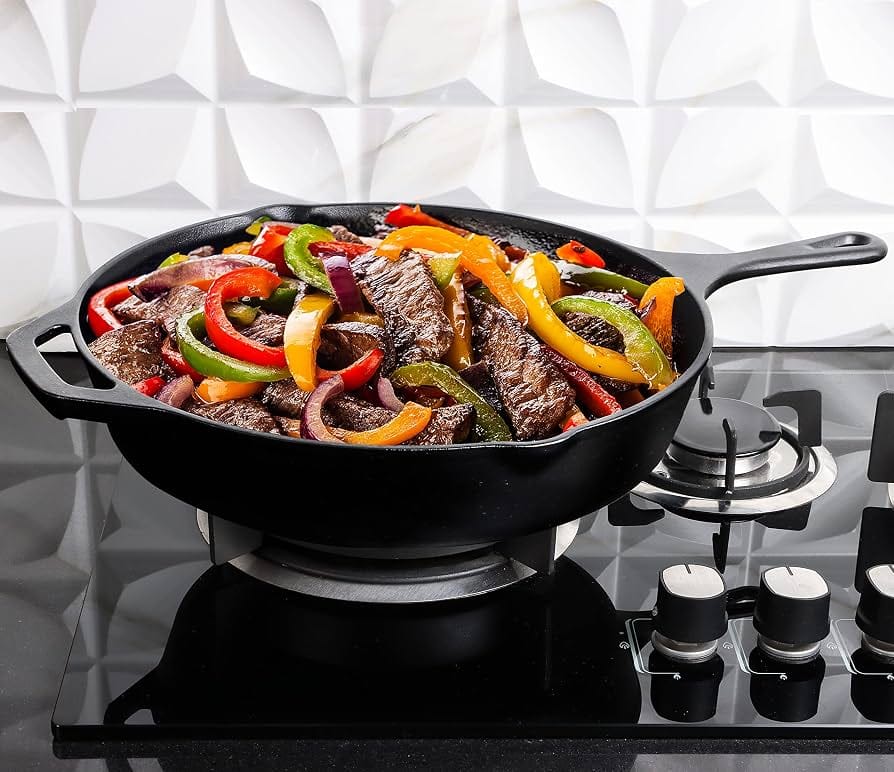
- Cast iron is ideal for searing steaks, roasting vegetables, and baking cornbread — anything that benefits from strong, even heat retention.
- Avoid cooking very acidic foods (tomato sauce, wine reductions) for long periods — acid can slowly break down seasoning over repeated use.
- A little extra oil when cooking eggs or delicate fish helps prevent sticking, especially on a newer or lightly-seasoned pan.
Shop Cast Iron Cookware
See our top-rated picks for skillets, dutch ovens, and griddles.
With just a few minutes of care after each use, a good cast iron skillet will genuinely outlast almost every other pan in your kitchen — and it only gets better with age.